

Why learn Arabic?
Because it will make you healthy, wealthy and wise. No, really. OK, I’m not rich but two out of three’s not bad, is it?
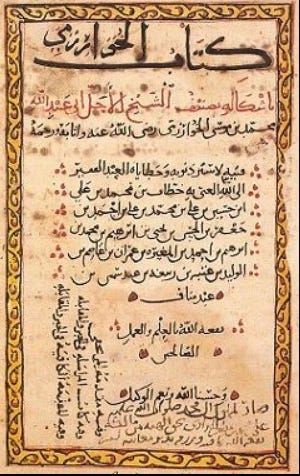
I can honestly say that the first reason for learning Arabic is sheer aesthetic delight. The language has an unearthly beauty that cannot be described in English; you have to experience it, and you can, whatever your age or background. I include in the pleasure incentive the joy of exploring a trove of literature still largely unknown in the Western world, the excitement of opening a door to a whole new world of places, of history and culture but above all of people. It’s why I called my language learning programme Bab, which is Arabic for door or gateway.
The second reason is that it’s one of the best possible pathways to neuroplasticity, the mental equivalent of giving your brain a regular workout to make it fitter, more powerful and better able not just to slow down the aging process but even reverse it. There’s an ever growing body of scientific evidence (take a look, for instance, at https://www.scientificamerican.com/article/learning-another-language-may-slow-brain-aging-huge-new-study-finds/) to support this claim about language learning in general. I believe the greater the gap between your mother tongue and the learned language, the better workout you give your brain in bridging it. Language processing is the most complex activity the brain has evolved to handle so do yours a favour and take it down the gym.
The third reason is that it can open up all sorts of career advantages and economic opportunities, whatever your field of operation. Don’t just take my word for it, having enjoyed a wonderful career, quite a lot of it spent in the Middle East. Hard-headed economists ( https://www.rand.org/pubs/research_reports/RRA1814-1.html) plot a direct correspondence between a country’s GDP performance and its linguistic skills, and for the Anglosphere, Mandarin and Arabic are the top earners. Don’t believe the monolinguists* who tell you everyone speaks English. First, they don’t, and second, ask a bridge engineer if you can build one starting at just one end. I’ve worked on some huge, complex international projects that involved mega-bucks and lots of people. Here’s what I learnt: in any project that spans two languages those who can use both will prevail.
On the subject of bridges my hope is to build a new one with Bab, and see it grow into a portal between peoples and cultures. I’ve spent a long time learning the relationship between written Arabic and the spoken language and I’ve poured years of language teaching experience into devising a teaching programme that covers both at the same time. I flatter myself that I am developing a new, so far unrivalled way to learn Arabic that combines knowledge of the literary language with practical, everyday communication. Twelve short lessons, if practiced diligently, provide a solid basis for further, independent acquisition, whether scholarly or through social interaction. Thereafter, the plan is to use authentic language resources such as the Quran, classical literature and contemporary culture, poetry, novels, films, music, news coverage, and more, for exploration that has infinite horizons. If Bab had a theme song it would be, as Elvis Costello sang, What’s so funny ‘bout peace, love and understanding?
Paul Harper
February 2026
Try a short first lesson which will have you writing Arabic before the end:

*AI Overview:
Monolinguists are individuals who speak, read, or write only one language. While common in many regions, they generally lack the enhanced cognitive flexibility, memory, and multitasking abilities often found in multilingual individuals, and they may not delay dementia symptoms as long as bilinguals.