

Arabic Lesson 6
Learn to read, write, speak and understand Arabic

This is the sixth lesson. You may want to start at Lesson 1.

In Lesson 5 you were asked to manipulate some of the new letters, words and structures that were introduced, because actually using the language is how you learn it. First you were asked to translate two English sentences and write them in Arabic:
She wrote the book in my office
and
He didn’t understand the (female) writer
Watch this video, check your results, and use it as a model to practice your own writing:
You were also given a task in spoken Arabic, which is taught in parallel (Levantine dialect) in this course.
The two, the written and the spoken, overlap but are different enough for the written language, also known as classical or modern standard Arabic, to have its own stream, as does the spoken or colloquial version, which appears, as in this dialogue in a greengrocer’s shop, in audio form only. Some of the dialogue could be written in formal Arabic but some exists only in spoken form.
Try to identify the meanings of specific words including: where? Potato, sorry, just/only, one, goodbye, I want.
Working out meanings by analogy or from context or intuition is the best way to learn new language.
Here is the same dialogue overlaid with English translations for you to check how much you were able to work out on your own, either from context or from language learnt in earlier lessons.
Do not worry if your translation differs a bit so long as the meaning is roughly right. Arabic and English do not correspond neatly word-for-word as languages more closely related may. But try to work out how the Arabic meaning is arrived at – there’s more explanation in the following audio file:
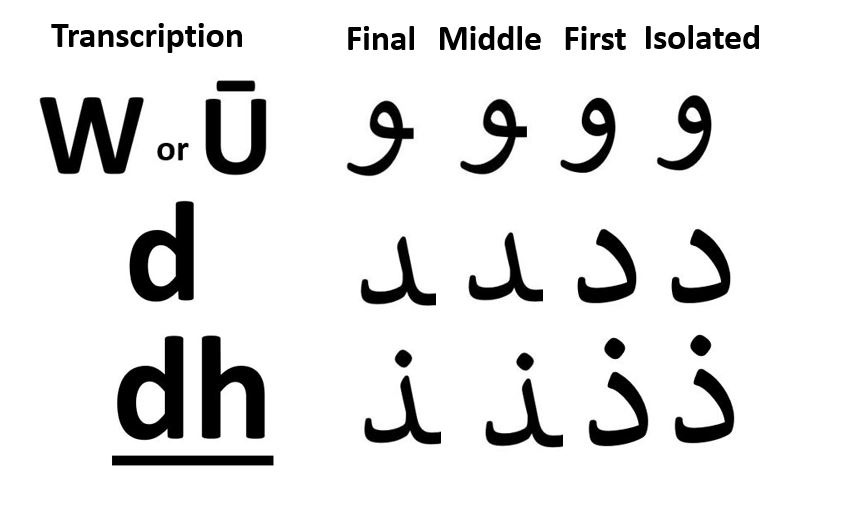
Let’s learn some new letters, starting with the third and final long vowel in Arabic:
Here in table format are our three new letters as generated by a print font:
Have a look now at these new Arabic words and try to work out how they are pronounced. Say them out loud.
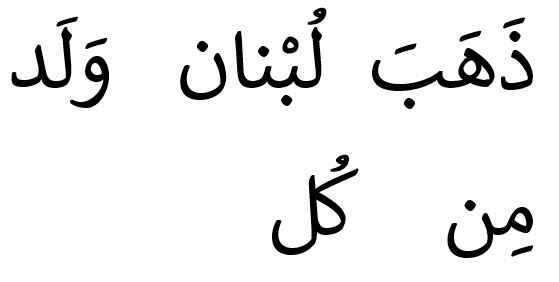
Watch the video to see the meaning of these words explained through possible ways to use them:
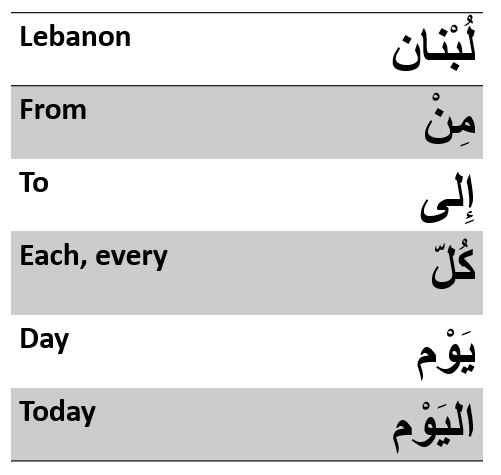
This lesson contains quite a bit of new vocabulary as well as verb conjugations. You may therefore find the following verb conjugations and vocabulary list useful in completing the translation tasks which ask you to manipulate the new language in this lesson:
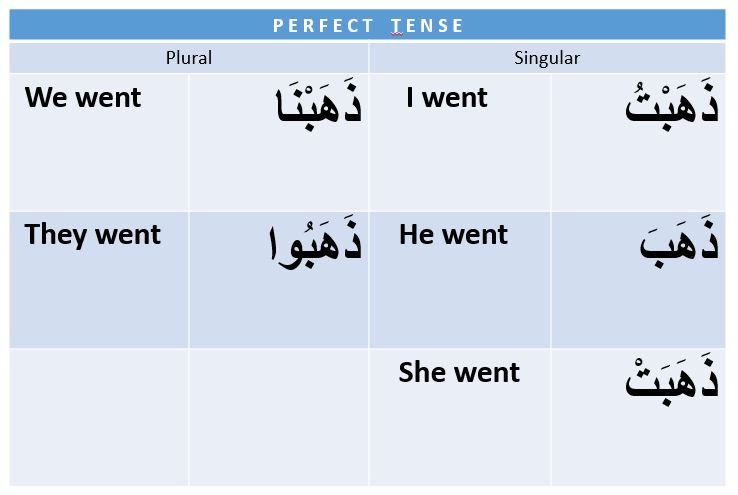
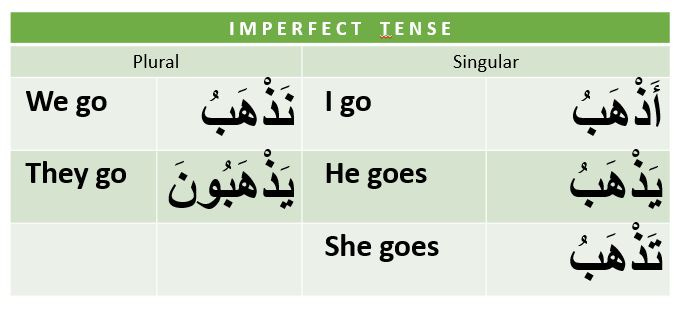
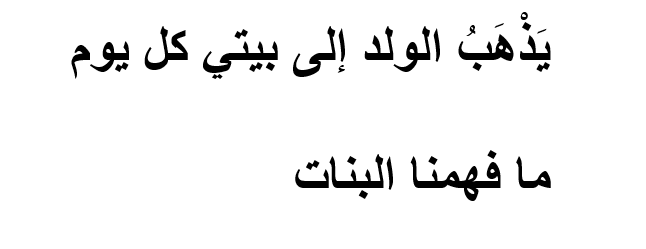
Translate into English:
Translate and write in Arabic:
I didn’t understand the boys and girls.
They went to the house every day.
Did the girl write the book in the office?
Listen to the audio file to hear what this woman is saying and produce an English translation:

Check your answers in Lesson 7.