Lesson 3
Learn to read, write, speak and understand Arabic

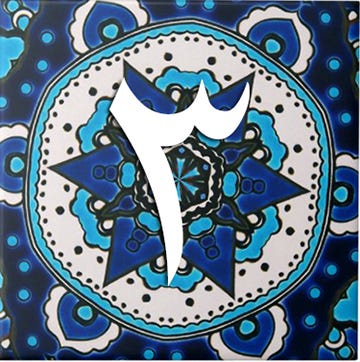
This is Lesson 3
You can find Lessons 1 and 2 here:


At the end of Lesson 2 you were asked to have a go at writing the Arabic for my house and my figs.
Watch the video and use it if need be to have a second go yourself, or a few go’s until it’s more or less correct.
You were also asked to listen to this audio of a guest being welcomed into someone’s
home and then guess what the meaning of the phrase is.
Hopefully you can hear that the first word is one you have just seen written:
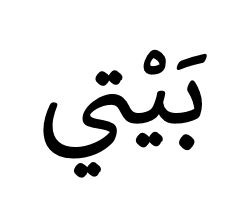
And the second word is also the Arabic for house but with a different pronoun ending.
If you used your intuition and guessed that this welcoming phrase means
‘My house is your house’ you have acquired some useful new language:
two possessive pronoun endings in the first (my) and second (your) persons.
Another useful bit of grammar is that you don’t need the verb ‘to be’ in
Arabic in the way you do in English. It’s enough to say in Arabic:
‘my house your house’ to mean ‘my house is your house.’
Let’s stay with those two pronoun endings…
If instead of attaching them to a noun like bayt (house)
we add them to the end of a preposition, then in spoken Arabic we get
what is in effect the verb ‘to have’. It’s like in English when you say something
is with somebody, for example it’s with me or with you, when you mean I have it
or you have it.
Listen to this audio:
That strange sound at the beginning of this preposition is the famous Arabic glottal stop, a letter we’ll come to write later. If you want to try now to make this sound yourself, listen carefully to this native speaker and then try to copy it by making a vowel sound as far back in your throat as you can and then kind of squeeze it as if to strangulate it, that is, to restrict the air flow as it comes out.
So here again is the simple preposition without any pronoun ending:
And here it is with the first person pronoun ending, meaning ‘I have’:
Next, the second person, meaning ‘you have’:
As part of a phrase meaning ‘I have figs’:
By changing the intonation you can ask the question, ‘do you have figs?’
Let’s learn some new letters, starting with the first letter of the
Arabic alphabet, which is called alif. It’s probably the most common
letter of all and is easy to spot not only because it’s tall but because
as a non-connecting letter there is always a gap between it and the following letter.
The next letter is the Arabic equivalent of English letter L. This Arabic letter is called lam:
.
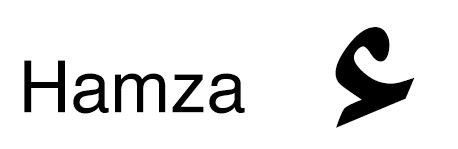
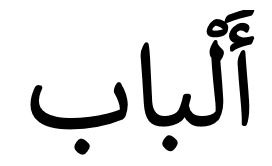
Hamza is a weird, will o’ the wisp kind of letter, unlike any other. Half-sized, half-way between vowel and consonant, it has only one form but is so weak it hardly ever stands on its own and must sit instead on top of another letter. It’s prone to disappearing altogether depending on the preceding letter
.
Learn how to write and say the Arabic for ‘no’:
Before you go on to Lesson 4 practice using the letters, words and phrases covered so far, both written and spoken.
How do you say in Arabic: I have a house. How about: Do you have a daughter?
Write the Arabic for ‘the girl’ and ‘the house’ and ‘my door’. Say them out loud as well.
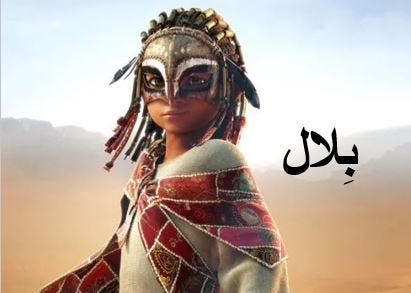
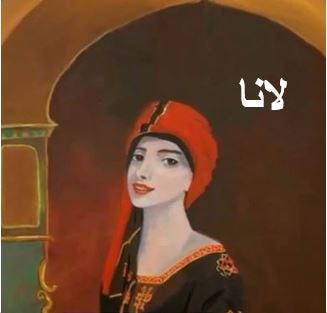
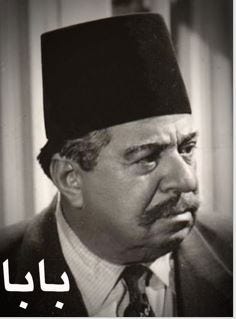
For reading practice, work out the names of these people and say them out loud. Check your answers in Lesson 4.